Veterinary Emergency and Critical Care Medicine is the field that diagnoses and treats patients that
need emergency and critical
assistance at the front line. Although the field of medicine itself is becoming increasingly
subdivided, diseases or injuries in
emergency patients are often very complicated; and a insight of diverse fields of disease and
multiple organ damage is required.
The field has been established in response to the demand for experienced medical staffs with
specialty training in emergency
medicine that can provide timely and high-quality emergency medical services by making split-second
decisions for order of
priority and treatment.
Emergency room provides a front line treatment of patients from the scene, and also is a midway
point prior to full
hospitalization. Therefore it also is a duty of our emergency team to cooperate with society and
public organizations to expand
the veterinary care beyond the hospital. SNU VMTH presents a new model for veterinary emergency
system in Korea by operating
Emergency Medical Center with systemic and professional manner; and it is an important role of
Department of Emergency and
Critical Care to organize systematic emergency program, as well as educating and training personnels
as well.
Emergency team perform preliminary examination and stabilizes the patient’s condition until further
examination and treatment
by relevant department is available. If needed, emergency team may conduct emergency surgery and
treatment as well.
As well as various emergency conditions requiring internal and surgical care, main field of
emergency medicine includes
resuscitation medicine including cardiopulmonary resuscitation, severe trauma resuscitation;
treatment of intoxication;
emergency cardiology and specialized cardiac management; and medical response in disaster
situations.
We carry out triage, a classification system based on the severity of the conditions, and operate a
fast track to provide
high-quality emergency medical care. We also train our medical staff through simulations so that
they can react promptly in
emergency situations.
Emergency patients can receive direct treatment at SNU
VMTH Emergency Medical Center regardless of the hospital system where university hospitals can
only receive patients who have been through first and second medical institutions.
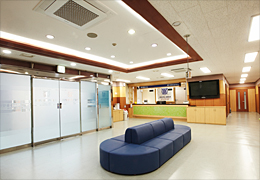
Emergency Medicine Center: Waiting area
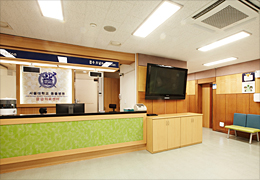
Emergency Medicine Center: Reception
Joint Treatment
For precise diagnosis and treatment for emergency patients, SNU VMTH Emergency Center operates joint
treatment system with
in-house specialists.
Department: Internal Medicine; General Surgery; Orthopedics and Neurology; Ophthalmology and
Dentistry; Dermatology;
Obstetrics and Gynecology; Diagnostic Imaging; Clinical Pathology, Anesthesia and Pain Management;
Avian and Exotic Animal;
and Farm Animal.
In addition, by communicating immediately with previous local hospitals, we can promptly and
accurately make diagnose and
provide appropriate treatment without overlapping examinations. Afterwards, the owner has options on
further treatment
methods: to transfer back to the local hospital, or to continue treatment at SNU VMTH through
further appointments with
relevant department.
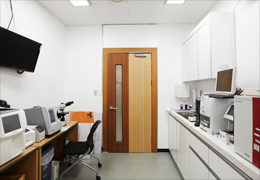
Emergency Medicine Center: Examination Room
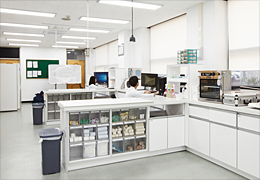
Emergency Medicine Center: Consulting Room
Professor
Min-su, Kim
Chief Veterinarian
Ha-young, Shin
Medical Staff
Jae-won, park
So-yeon, park
Hae-na, Kim
Ha-jun, Shin
Animal Health Technician(AHT)
Hye-jin, Ahn
Introducing Our Emergency Medicine Center
The SNU VMTH has opened its Emergency Medical Center on the first floor of the old animal hospital
building upon completion of
the expansion of the new VMTH building in 2017. Emergency medical service system has been expanded
to cover 24-hour
services starting January of 2019. Regardless of the hospital‘s consultation system where the patient has
to go through first/secondary medical institutions before
being consulted at the university hospital, if you visit the Emergency Medical Center on an
emergency basis, you can receive
emergency services directly on the day of your visit.
Veterinarians specializing in emergency medicine are responsible for emergency medical services at
the Emergency Medical
Center, under the supervision of professors of emergency medicine. In cases of night-time
emergencies and when cooperation
with other departments is required, joint treatment system is operated with other specialized
medical staff to provide more
precise consultation and treatment.
We also take appropriate measures to perform only the necessary treatment by maintaining smooth
communication with the
local hospitals and assessing the patient‘s status quickly and precisely.
Directions to the Emergency Room
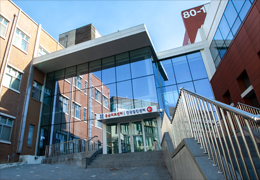
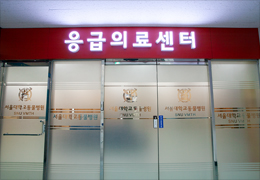
1. The entrance to the Emergency Medical Center is at the very center of the current VMTH entrance.
Overview of the Emergency Medicine Center
Entrance to the Emergency Medicine Center
2. When you come through the main gate, you can enter the Emergency Medical Center on your left, and
proceed to the waiting
room to process your emergency reception. When the medical staff are tending to other emergency
patients, they may not be
present in the waiting room.
If you press the call bell, the medical staff will prioritize according to the severity of the
patient's condition and proceed with
emergency medical services.
Emergency Medicine Center
Emergency Medicine Service Procedures
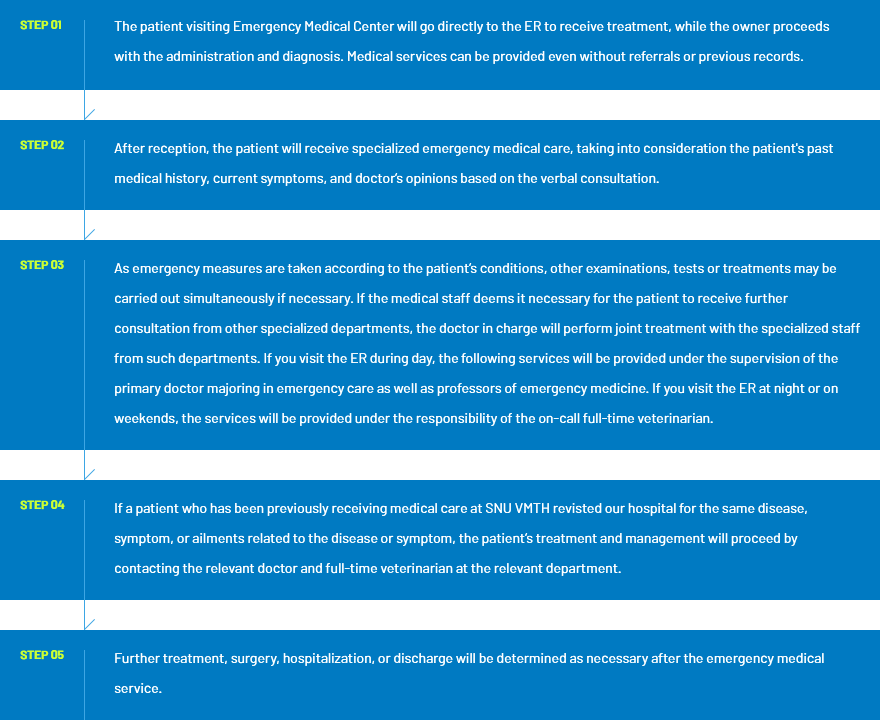
01. The patient visiting Emergency Medical Center will go directly to the ER to receive treatment,
while the owner proceeds with the administration and diagnosis. Medical services can be provided
even without referrals or previous records.
02. After reception, the patient will receive specialized emergency medical care, taking into
consideration the patient's past medical history, current symptoms, and doctor‘s opinions based on
the verbal consultation.
03. As emergency measures are taken according to the patient‘s conditions, other examinations,
tests or treatments may be
carried out simultaneously if necessary. If the medical staff deems it necessary for the patient
to receive further
consultation from other specialized departments, the doctor in charge will perform joint treatment
with the specialized staff
from such departments. If you visit the ER during day, the following services will be provided
under the supervision of the
primary doctor majoring in emergency care as well as professors of emergency medicine. If you
visit the ER at night or on
weekends, the services will be provided under the responsibility of the on-call full-time
veterinarian.
04. If a patient who has been previously receiving medical care at SNU VMTH revisted our hospital
for the same disease,
symptom, or ailments related to the disease or symptom, the patient‘s treatment and management
will proceed by
contacting the relevant doctor and full-time veterinarian at the relevant department.
05. Further treatment, surgery, hospitalization, or discharge will be determined as necessary
after the emergency medical service.
Guidelines for visiting emergency medical center
If bleeding severely or when bleeding persists for more than 5 minutes
In case of suffocation, difficult breathing, or persistent coughing and retching
If there is blood in the patient‘s nose, mouth or rectum, or if the patients vomits blood, or
if blood urine/blood stool is observed
If the patient is unable to defecate or urinate, or if the patient exhibits clear pain when
defecating or urinating
If ingestion of toxic substances (i.e. antifreeze, xylitol, chocolate, rodenticide, etc.) is
confirmed or suspected
If the patient has a seizure or cannot walk properly
If the patient suddenly starts limping does not use the leg at all
If the patient exhibits signs of pain or severe anxiety
In case of stress due to heat such as heat stroke, etc.
When vomiting or having diarrhea twice a day or more
If the patient does not drink water for 24 hours or longer
If the patient is unconscious
If you feel that there are any problems with your companion animal's health, you
should seek medical attention at the medical emergency center or from a veterinarian.